Pull up two tabs and search the same village. On one, Catskill's median home price sits at $350,000. On the other, it's north of $455,000. Same town, same season, a six-figure gap that would suggest either a screaming deal or a serious mistake, depending on which number you believed first.
Neither number is wrong. They're just answering different questions, and the reason they can drift that far apart in a village this size tells you more about how to shop Catskill's market than either figure does on its own.
Two Tabs, One Village, a Six-Figure Gap
Here's what each source is actually reporting, side by side:
| Source | Time window | What it counts | Median price | Sales in window | Days on market |
|---|---|---|---|---|---|
| Redfin | 3 months ending May 2026 | Closed sales | $350,000 (up 34.5% year over year) | 10 homes in May | 114 (down from 162 a year earlier) |
| Movoto | June–July 2026 | Active asking prices | $455,000 in July (down 6% from June and from a year earlier) | 69 homes sold in June | 64 (down 17% year over year) |
Look at the sales counts before you look at the prices. Ten closed sales in May. Sixty-nine in June. That's not a market that tripled its pace in thirty days. It's a signal that these two platforms aren't drawing from the same footprint. One is almost certainly measuring the village proper, a tight grid of streets around Main and Bridge. The other likely defaults to the broader 12414 ZIP code, which stretches well past the village line into the rural town of Catskill, where lot sizes, home sizes, and price points all run differently. Neither company publishes its exact boundary rules in a way a homebuyer can easily audit, but the sevenfold jump in sales volume is the tell.
Why Ten Sales Can Swing a Headline
Even inside a single, consistently defined footprint, a market this small produces numbers that jump around on their own. When only ten homes close in a month, one large historic sale or one modest fixer-upper can move the median by tens of thousands of dollars. That's simple math, not a market signal.
There's a second layer hiding in the same data. Redfin's price-per-square-foot figure fell 26.3% year over year even as its median sale price rose 34.5% over the same three months. Those two numbers can only both be true if the homes actually selling got bigger. A handful of larger, older Main Street-era houses moving through a ten-sale month will push the total price up while dragging the per-square-foot number down, because square footage is growing faster than price is rising on a per-unit basis. That's not the market losing value. It's the mix of what's selling shifting toward the kind of large, character-rich housing stock the village is known for. This year's on-market inventory in the Historic District has included at least one home built in 1885, exactly the type of property that can single-handedly bend a ten-sale month.
The Reason the Sample Stays This Thin
Small sample sizes don't happen by accident. They're the visible symptom of a much larger and well-documented freeze in seller behavior across the wider Hudson Valley.
Many owners who bought or refinanced during the pandemic locked in mortgage rates near 3%. As recently as this spring, conventional rates were running closer to 6%, roughly double. Consider an owner sitting on a $700,000 mortgage at that old 3% rate. Trading it in for a comparable rate near 6% on a similarly priced replacement home nearly doubles the monthly interest cost of that debt. For a lot of Catskill-area homeowners, that math is reason enough to stay put rather than list, even if they'd otherwise be ready to move. Fewer owners listing means fewer closings each month, which means each individual sale carries more statistical weight, which means the headline median swings harder than it would in a deeper market. The thin sample and the rate-driven inventory shortage are the same story told twice.
What This Actually Means for the Three Kinds of Property People Are Comparing
Nobody buying in Catskill is really shopping "the median." They're shopping one of three distinct pockets, and each behaves differently enough that a single village-wide number tells you almost nothing useful about any of them.
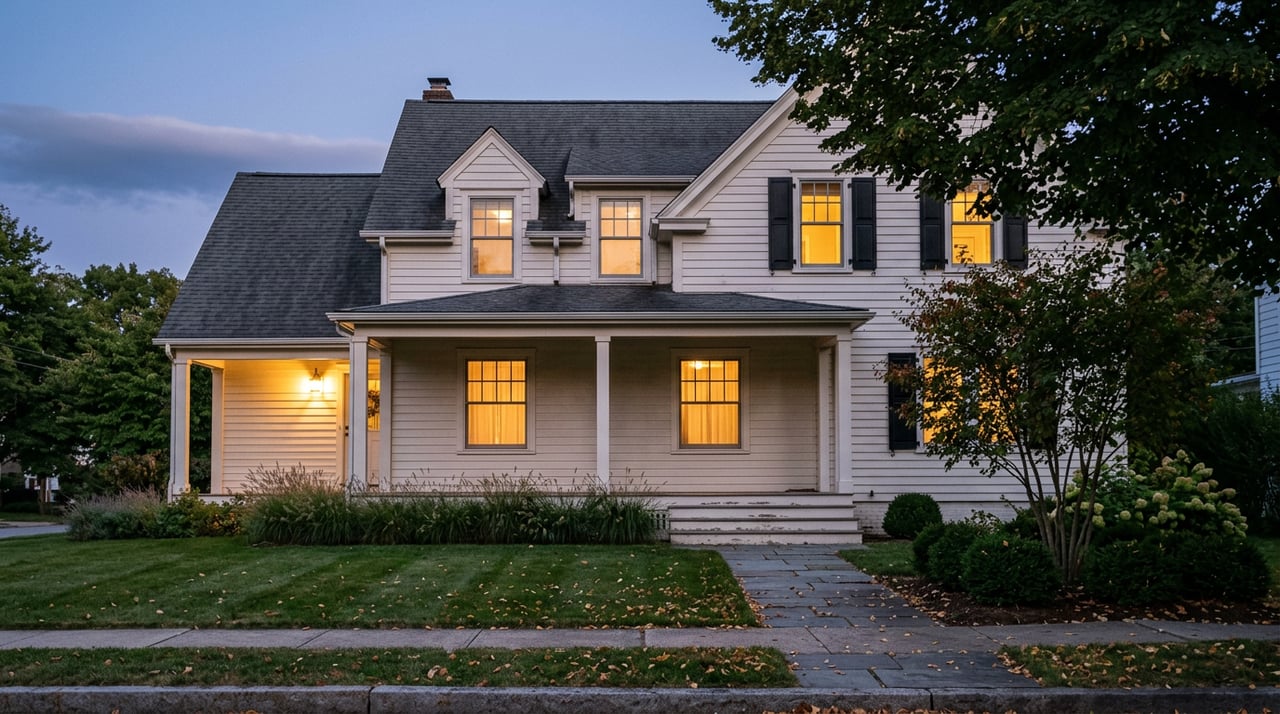
Main Street and the Historic District. This is where the large, older homes near landmarks like the Thomas Cole National Historic Site tend to concentrate. It's also where a single big transaction can swing both price and price-per-square-foot in the same month, as the numbers above show. If you're comparing homes here, ask your agent for comps drawn from this pocket specifically, not the village-wide average.
The waterfront. Active waterfront home listings in and around Catskill currently run in the low teens, a genuinely thin market where "median" barely applies with a straight face. It's worth separating waterfront land from waterfront homes here too. Recent listing data for waterfront land parcels near Catskill puts the average asking price around $125,000, translating to roughly $28,090 per acre, a completely different number from what a finished home on the Hudson near Dutchman's Landing Park or the Catskill Yacht Club would command. If someone tells you "waterfront in Catskill runs about $125K," ask whether they mean a buildable lot or a house with a dock.
Town acreage and the outskirts. This is likely where Movoto's broader footprint is pulling a meaningful share of its 69 June sales, properties with more land, more square footage, and price points that skew the ZIP-wide median upward relative to the tighter village numbers Redfin reports.
The Number Worth Actually Asking For
None of this means the market is unknowable. It means the published median is a starting point for a conversation, not the answer to it. The useful question isn't "what's Catskill's median home price right now." It's "what have homes like this one, in this specific pocket, actually closed for in the last few months." That number exists. It just doesn't show up on a portal's homepage, because portals are built to summarize an entire market in one line, not to tell you what your particular comparison actually is.
Frequently Asked Questions
Why do different real estate websites show different prices for the same town? Different platforms often measure different things: closed sales versus active asking prices, different trailing time windows, and sometimes different geographic boundaries around what counts as "Catskill." In a market with only a handful of sales per month, those differences compound into large headline gaps.
Is Catskill's market actually cooling, given the price drops some sites report? The data is mixed on purpose. Redfin's closed-sale median was up sharply in the three months ending May 2026, while some listing-based medians ticked down slightly heading into summer. Both can be true at once in a market this thin, which is exactly why a single monthly snapshot shouldn't be read as a trend.
Will Catskill's inventory loosen up soon? Inventory is tied closely to whether current owners are willing to trade a low pandemic-era mortgage rate for a market rate closer to 6%. Until that math changes meaningfully, expect the village's sales counts, and the swings in reported medians, to stay on the small side.
If you're trying to figure out what a specific Catskill property, in a specific pocket of the village or the surrounding town, is actually worth right now, a broad median won't get you there. CENTURY 21 New West Properties works these comps street by street. Request a Free Property Valuation and get a number built from what's actually closing near you, not from whichever boundary a portal happened to draw.